Chilblains - all you need to know this winter
Chilblains (or perniosis) are one of the most common winter-related skin problems. These are small itchy red or purple colour swellings over fingers & toes.

Dr. Nitin Ranjan
Winters are here, and so are the winter-related skin problems, like dry skin, chapped lips, & cracked heels. Chilblains (or perniosis) is one of the most common winter-related skin problems. Chilblains are small itchy red or purple colour bumps that occur as a reaction to cold weather. Exposed parts of body (like extremities toes, fingers, nose, ears and heels) are mostly affected. Though uncomfortable, they hardly cause any permanent damage. If further exposure to cold is avoided, these usually clear in 1-3 weeks.
Why do chilblains develop?
Chilblains occur as a result of abnormal response to cold. The blood vessels at the surface of skin get constricted on exposure to cold weather. At this stage, if there is sudden rewarming of skin it causes increased blood flow in already constricted blood vessels. This leads to leakage of blood from vessels into the surrounding tissue and subsequent inflammation, redness, itching and swelling. 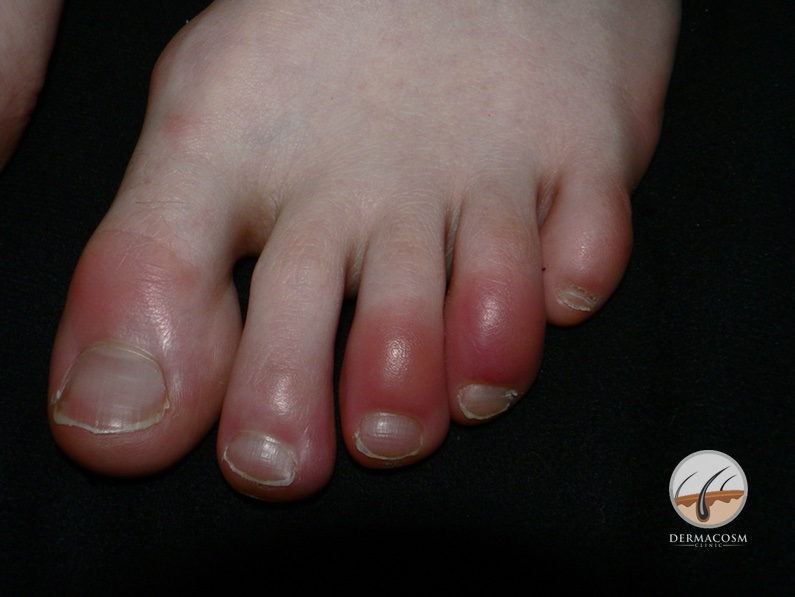 Chilblains usually occur in damp cold weather , as seen mostly in this part of country during the months from December to February. However, these are less common in countries with extreme of cold weather as air is drier and people have specially designed clothing to counter extreme cold.
What are the risk factors?
Some people are at more risk of developing chilblains as compared to others. The factors that increase the risk include:
- regular exposure to cold damp conditions
- family history of chilblains
- people with poor blood circulation
- tight clothing and shoes in cold damp conditions
- women are more susceptible than men
- a poor diet or low body weight
- Raynaud’s phenomenon : a common condition that compromises blood supply to toes/fingers or extremities
- smokers are at more risk, as nicotine constricts blood vessels
What are the symptoms of chilblains?
Chilblains usually develop several hours after exposure to cold. There occurs itching and burning sensation at the extremities exposed to cold, which becomes intense if you suddenly go to warm condition. There appears swelling and redness on affected skin. 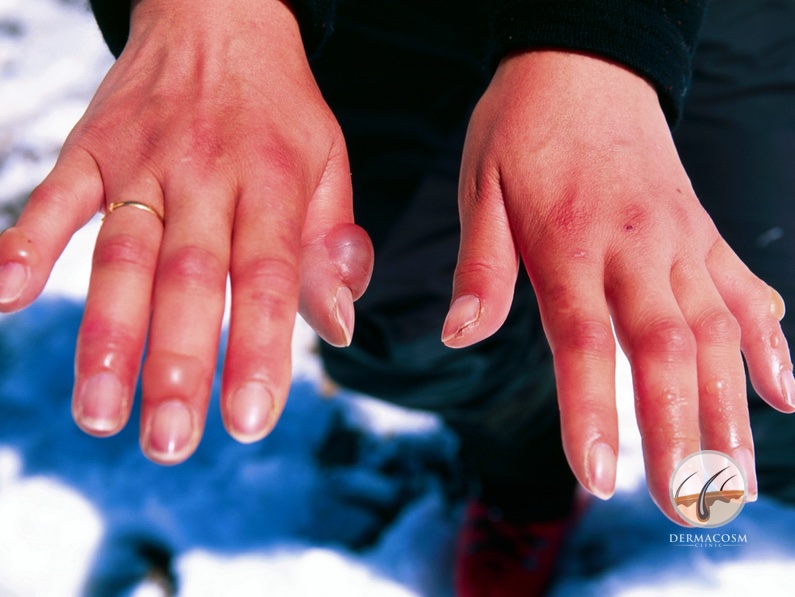 In extreme cases, there may be complications of sores or blister formation. There affected area can get secondarily infected.
When to visit a doctor?
Generally, there is no need to visit a doctor, as with proper care and precautions these subside on their own within a few days. But in some severe cases, you may have to consult a doctor. These include:
- chilblains that do not subside in few weeks
- severe chilblains causing sores or blisters
- infection of affected area: swelling, pus, fever
- if you are diabetic
What can I do to prevent development of chilblains?
If you are susceptible to chilblains, you should reduce the risk of developing them by following these measures:
- limiting exposure to cold : wear warm clothes and insulate your hands, feet and legs. Keep your house and working environment warm.
- if your hands or feet get cold, it is important to warm them gradually, rather than quickly placing them over heater or blower, as this is the main cause of chilblains.
- keep active, as this improves the blood circulation
- avoid tight clothing, socks or shoes , as this compromises blood supply to skin
- stop smoking
- moisturise your feet regularly as it stops drying and cracking
- eat food and fruits that keeps you warm in winters as dry fruits
- avoid drugs that cause constriction of blood vessels as caffeine, decongestants
Is there any treatment of chilblains?
Chilblains subside within a week or two without any medical treatment. In case of itching or discomfort at affected area, application of soothing calamine lotion is sufficient. Vasodilatory drugs(like nifedipine)are usually prescribed in severe or recurring cases. This drug relaxes the blood vessels and improves the blood supply. It improves healing of existing sores and prevent development of further swellings during winter season. If you like this post, do share it with your friends.
Dermacosm Clinic, Aligarh
Dr. Nitin Ranjan · MD (Dermatology) · Daily, 9:30 AM to 2:30 PM
Book an appointment →Shop no. 1, Kaveri Apartments, Near Meenakshi Cinema Flyover, Ramghat Road