How to reduce a keloid scar?
A keloid scar is a raised scar that forms after an injury has healed. A keloid scar can only be minimised, and not completely eliminated.
Dr. Nitin Ranjan
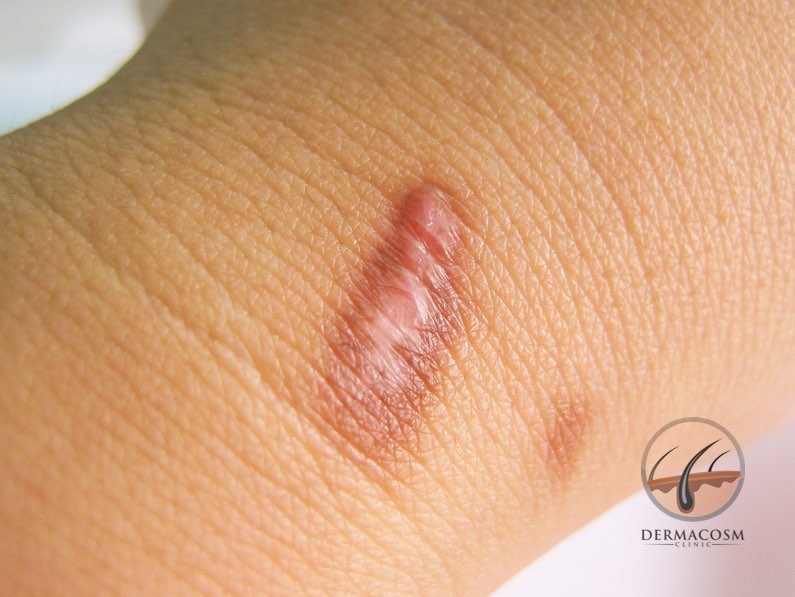
A keloid scar is a raised scar that forms after an injury has healed. Scar formation is the body’s natural way of healing and replacing lost and damaged skin. The damage of the skin can be due to infection, injury, surgery or inflammation that heals by replacing the normal skin with fibrous tissue or scar. Scar may form anywhere on the body. The appearance and composition of scar may differ, it can be pale, sunken, plumpy, itchy or coloured.
How does a keloid scar form?
Sometimes during wound healing process, there occurs an imbalance in collagen production. The collagen is overproduced and scar keeps growing even after the wound is healed. This excessive fibrous tissue is labelled as a keloid scar. Some people also call it a hypertrophic scar. In this post, we would discuss the treatment of keloid or hypertrophic scar. Though both these scars appear similar and undergo similar treatment, but there is a slight difference between the progression of these scars. Hypertrophic scar do not extend beyond the boundaries of original wound, while keloid scars keep on overgrowing beyond the original wound.
Where do keloid scars develop?
Keloid type of scars are more likely to form overarea of breastbone, upper arm, shoulders, upper back and ear lobes. Sometimes, acne also heals as hypertrophic or keloid scar. 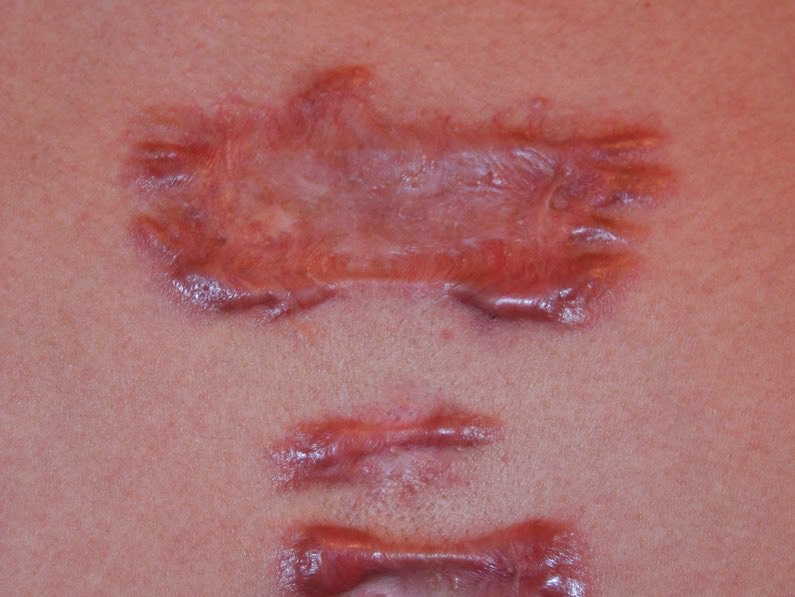 These type of scars are raised above the skin, appear fleshy or plumpy and shiny. These are hard to touch, sometimes may be painful or itchy.
How can a keloid scar be minimised?
There is no way to completely eliminate a scar, it can only be minimised. There are different types of treatment available for specific scar types. The most common scar minimising techniques for hypertrophic or keloid are as follows:
- Silicon gel : application of silicon gel over this type of scar is the first line of treatment. Silicon gel increases hydration and decreases the fibroblast activity of scar. It has a limited efficacy in reduction of keloid and hypertrophic scar when used for 3- 6 months daily.
- Intralesional injection of corticosteroids: This**** is the most common treatment of keloid and hypertrophic scars. Steroids inhibit collagen synthesis and possess anti inflammatory properties. Atrophy of tissue is well known side effect of steroid therapy, this is utilised to have beneficial effect in keloid or hypertrophic scars. Multiple injections of steroid are given on scar tissue to cover it entirely on single sitting. The injections are repeated after 3-4 weeks to achieve desirable effect. Response varies from 60-100%, though there are chances of recurrence of resolved scars.
- Other therapies aimed at reducing the size of keloid and hypertrophic scar include surgical excision, cryosurgery, laser ablation and radiation therapy. These treatment may reduce the size of scar with limited efficacy, besides these are costly and there is always a chance of recurrence with these modalities. So these treatments are not popular compared to intralesional corticosterone.
If you like this post, don’t forget to share it with your friends.
Dermacosm Clinic, Aligarh
Dr. Nitin Ranjan · MD (Dermatology) · Daily, 9:30 AM to 2:30 PM
Book an appointment →Shop no. 1, Kaveri Apartments, Near Meenakshi Cinema Flyover, Ramghat Road